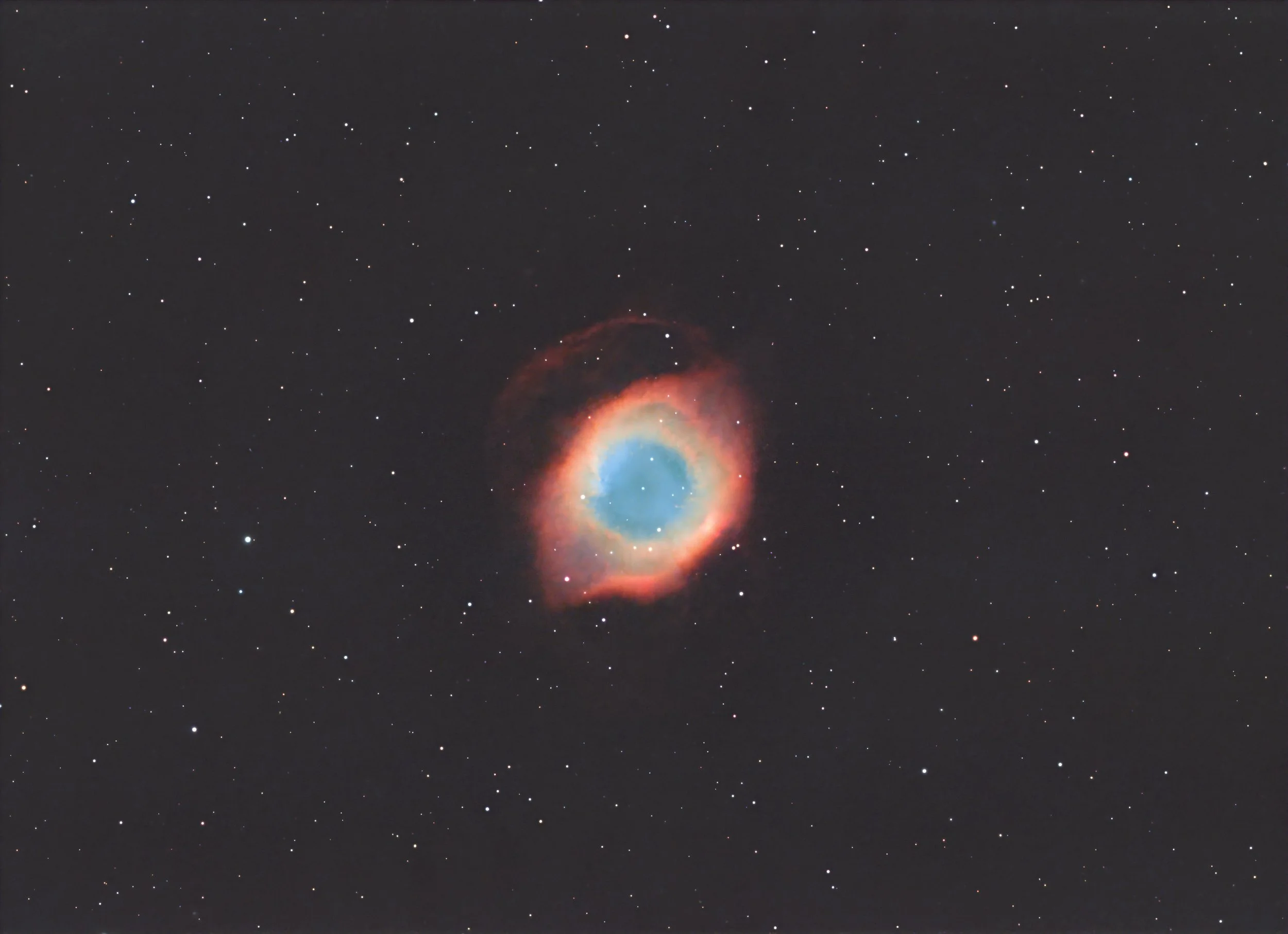
The Helix Nebula
The Helix nebula 693Ly 8/31-9/3/2025
————————————————————————
NGC 7293 imaged over 3 nights for a total of 14.5 hours of exposure time with a dual narrow band filter to isolate the Ha and OIII gases. This is my first successful attempt at imagining this nebula. It’s been on the bucket list for 3 years now! I’m proud to share it with all of you! Now some information from the app Sky Guide.
——-————————————————————
The Helix Nebula (NGC 7293 or Caldwell 63) is a +7.30 magnitude planetary nebula located in the constellation Aquarius, about 693 light-years from Earth. As one of the closest planetary nebulae to our solar system, it provides a detailed view of a star’s final stages of evolution. Often referred to as the “Eye of God” due to its striking ocular appearance in photographs, the Helix Nebula spans nearly three light-years in space.
Discovered by Karl Ludwig Harding in 1823, the Helix Nebula formed when a medium-mass star expelled its outer layers near the end of its life. The remaining core, a white dwarf, emits high-energy radiation, causing the surrounding gases to fluoresce. The nebula’s central star is incredibly hot, with a temperature of 120,000 K, and will eventually cool to become a fully degenerate white dwarf.
One of the nebula’s most curious features are its cometary knots
———————————————————————
📸ZWO ASI183mc Pro
Gain 111
Cooled to 4*F
300s X 297
Total exposure time 14h5m
🔮SV220 7nm Dual-pass filter
🔭Svbony 503 80ed with .8 reducer/flattener
440mm 750mm due to sensor size
F/5.6
🪜Sky-Watcher Star Adventurer GTI
📷Guided with ASI 120mm mini/Scooe
ZWO ASIAIR Mini
25flat, dark flat and Dark frames X3 (calibration)
Clear 65*F
Stacked in DSS
Processed in Pixinsight, Siril and Lightroom
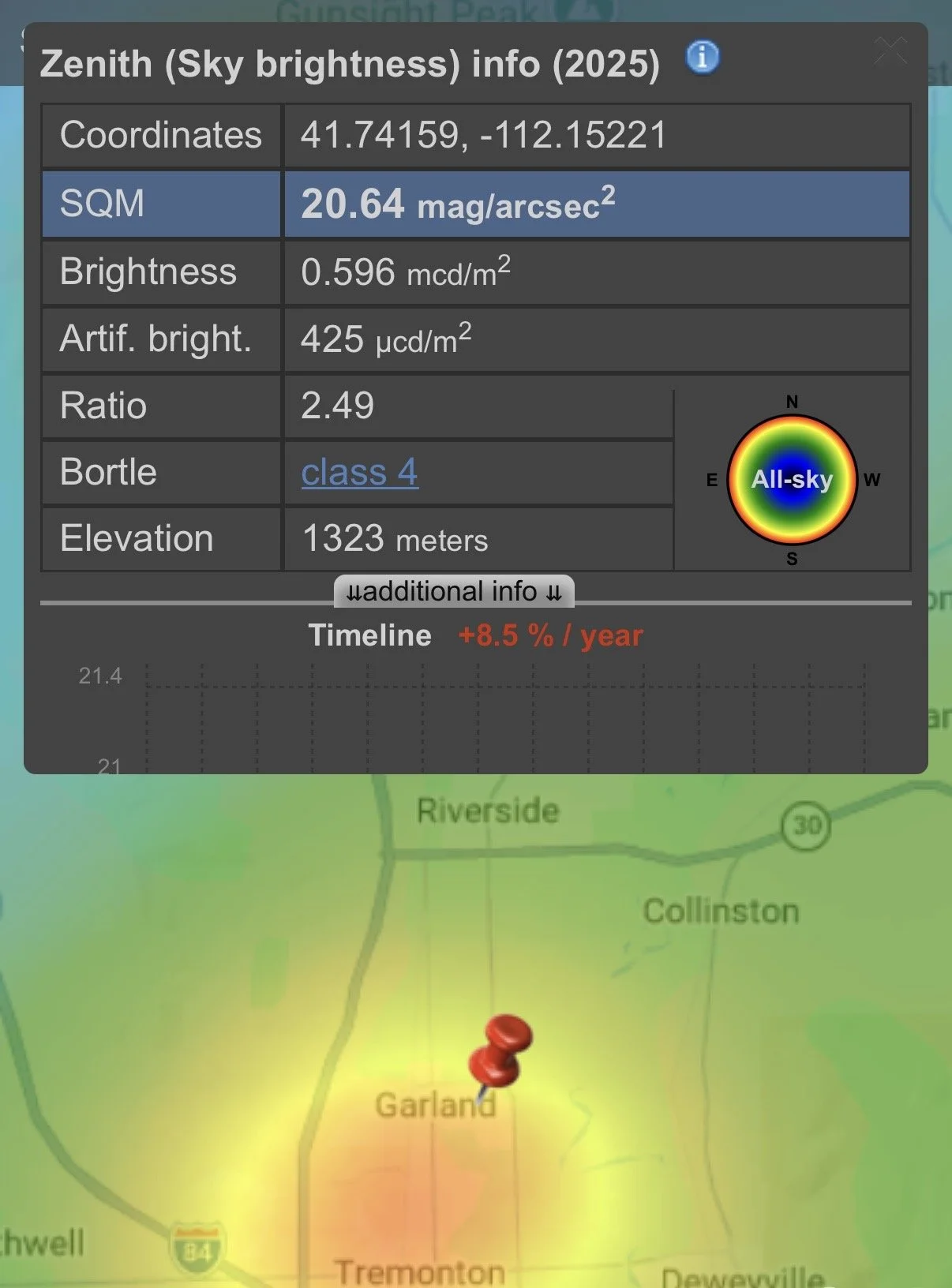
Garland-UT
Bortle 4